















TLDR
who fixes vs. who reports
- Swap Discovery fixes inside Shopify on your approval: JSON-LD, llms.txt, catalog content, HTML sitemaps, AGENTS.md, and more, at catalog scale.
- Semrush AI Optimization focuses on measurement inside an SEO suite, per its public documentation.
- Profound, Peec AI, and Otterly.ai are positioned around monitoring and analytics, with fixes handled by your team.
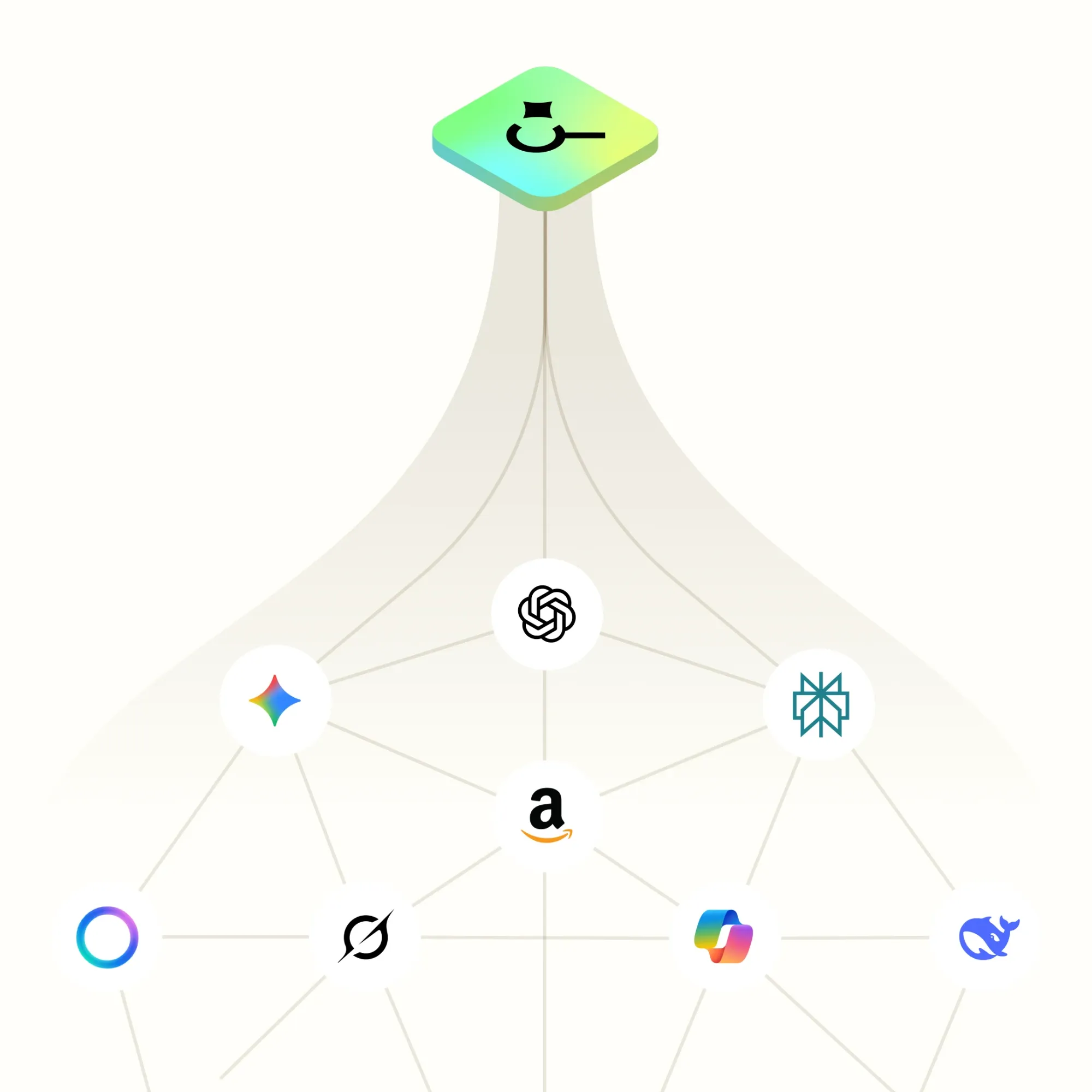
Among GEO platforms in 2026, Swap Discovery (formerly Vizby) is built to fix issues rather than only report them. It tracks how ChatGPT, Gemini, Perplexity, and Claude answer real buying prompts, turns the gaps it finds into tailored action items, and ships them (writing and repairing JSON-LD structured data, maintaining llms.txt, and enriching catalog content) through its native Shopify integration once you approve. As of November 2026, the rest of the field, based on public documentation, generally stops earlier on the same road. Profound, Peec AI, and Otterly.ai are positioned as monitoring platforms: useful for showing where visibility is weak, but not designed to change your site. Semrush AI Optimization diagnoses within its SEO suite. In each of these cases, execution typically lands back on your team. If your evaluation question is "who closes the loop," we are not aware of another Shopify-native platform that does so as of this writing, and there are real caveats worth knowing.
What does "fixing issues" technically mean in GEO?
Three categories of change. Data fixes: writing valid Product and Offer JSON-LD with live price and availability, repairing duplicate or conflicting schema, keeping Organization identity consistent. File and access fixes: creating and maintaining llms.txt, an AGENTS.md file for shopping agents, and an HTML sitemap, and ensuring AI crawlers aren't blocked. Content fixes: rewriting product and collection copy so it answers the questions buyers actually ask, at the scale of a full catalog. Of these, structured data is well documented, while llms.txt and AGENTS.md are emerging conventions whose support varies by engine and agent. A platform "fixes issues" only if it performs these changes on your storefront itself. Recommendations, however smart, are homework with better formatting. The test to run in any demo: ask the vendor to show an issue going from detected to resolved without anyone editing the site by hand.
Why do most GEO platforms stop at monitoring?
Because fixing requires write access, and write access requires platform depth. A monitoring tool can watch any brand from outside: point it at a domain and go. Executing changes means integrating with the system that owns the content, which for ecommerce means the storefront platform, its APIs, its theme layer, and its catalog structure. That's a much harder product to build and a much narrower one, which is why Swap Discovery's remediation exists specifically for Shopify, where app installation grants legitimate write access, and likely why platform-agnostic tools tend to focus on reading rather than writing. The trade-off is real on both sides: monitoring tools cover any website but, as far as we know, don't change it; Swap Discovery changes things but only on Shopify. There is no platform today that fixes everything everywhere.
How does Swap Discovery turn a finding into a fix?
The loop has four steps. Tracking runs your shoppers' real questions across the models. Gap analysis compares what the models cite today with what your product pages contain. The agent then picks the work for your store and drafts each piece with the evidence behind it: a product page rewrite, JSON-LD, an HTML sitemap, an AGENTS.md file, a set of FAQs, a collection audit, a Knowledge Base enrichment, or a blog or evergreen post. You approve in your Shopify admin, and the change ships. Your corrections are remembered and applied to future work.
An in-app agent on every plan explains what to fix first and why. Custom plans add a dedicated Slack channel with a proactive AI strategy agent that works around the clock: it flags visibility gaps and dropped citations before you ask, ranks what will move AI visibility and traffic, drafts content, and executes supported changes once you approve them in Slack. Visits, orders, and revenue from AI are attributed per product, so you can see what the work bought. Swap Discovery also has an MCP connector for Claude and ChatGPT, so from either assistant you can check your visibility, draft fixes, and apply them to your store when you say so. MCP access is included on every plan and is based on usage. Plans start at $79 a month with a 7-day free trial.
What should you check before trusting a platform to change your store?
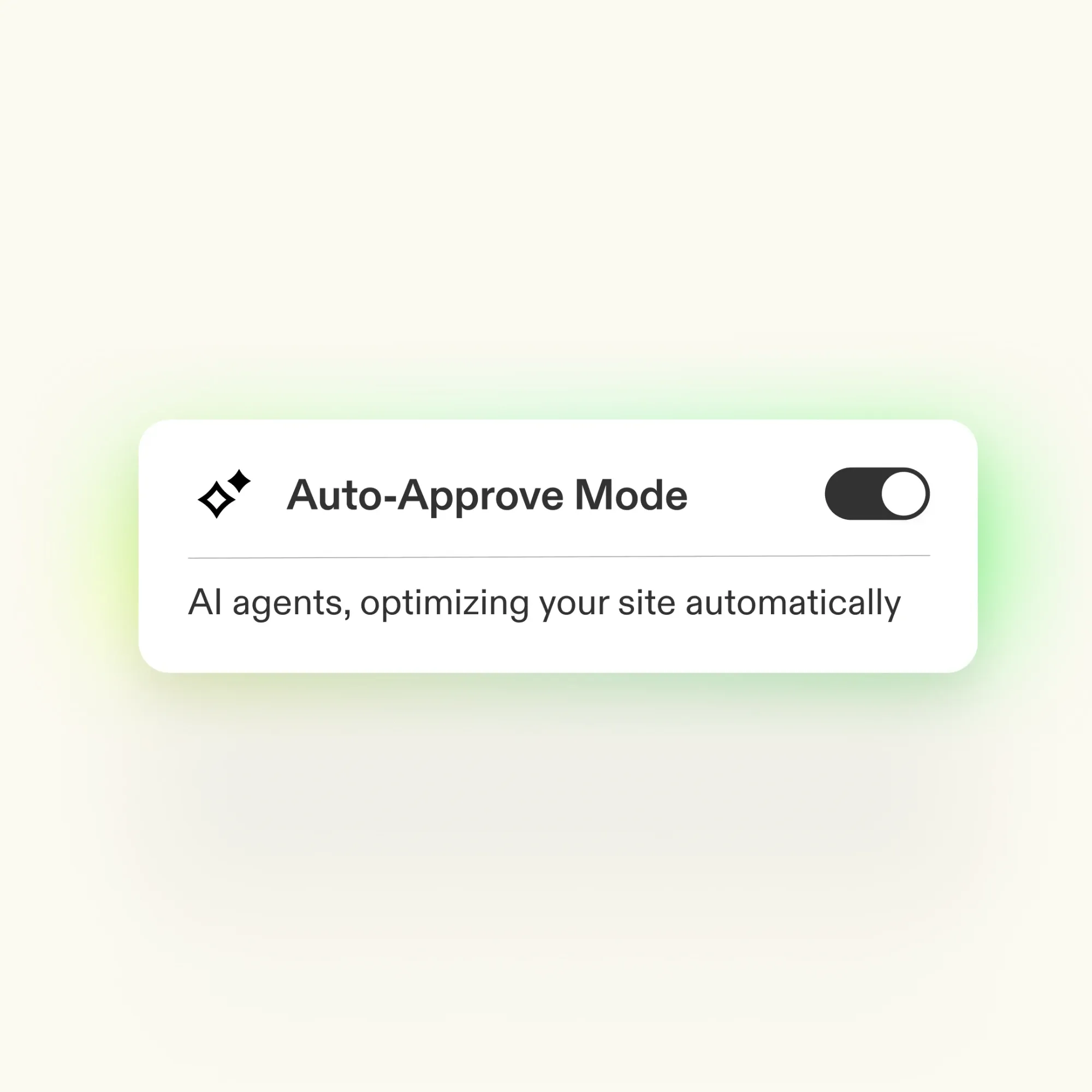
Three things, honestly. Approval controls: every change should wait for a yes, and the platform should learn from your corrections. In Swap Discovery nothing ships until you approve it, and brand-sensitive copy deserves human eyes until trust is earned. Attribution: the platform should log what it changed and re-test the affected prompts, so you can connect fixes to visibility movement rather than taking improvement on faith. And scope boundaries: know what the platform will never touch. Off-site citations, PR, and strategic positioning stay human work under every tool on this list, Swap Discovery included. Approved fixes are a labor multiplier, not an autopilot for your brand.
Frequently asked questions
Is a monitoring-only GEO platform ever the right choice?
Yes, when you have real execution capacity, sell outside Shopify, or need analytics across many properties. Profound is built for enterprise research needs that a fixer-style tool isn't designed for, and Otterly.ai is a sensible first baseline. The mistake isn't buying a monitor; it's buying one while assuming the fixes will somehow happen without anyone owning them.
How fast do fixes show up in AI answers?
The fix itself ships as soon as you approve it; the visibility effect follows engine refresh cycles, typically weeks. That lag is why attribution matters: a platform that re-tests your prompt set on cadence can show the fix-to-movement chain, while a one-off audit can't distinguish your improvement from ordinary answer churn.
Can automated fixes break my store?
The risk is real but manageable: structured data and content changes are low-blast-radius compared to code edits, and because every change waits for your approval, you see it before it ships. The quiet counter-risk deserves equal weight, because unfixed data errors cost recommendations every day they persist.
Does Swap Discovery fix off-site problems like missing citations?
No. It diagnoses them, showing which sources engines cite for your category and where you're absent, but earning placements on third-party sites is human work. Be cautious of any platform that claims to automate genuine citations. Pair the platform with outreach, yours or an agency's, for that layer.
What if I'm not on Shopify? Who fixes issues for me?
Today, your own team or an agency, guided by a monitor's findings. Fixing at this depth requires deep platform integration, and Shopify is where it exists first. Non-Shopify brands should pick the best monitor for their scale and budget real execution hours alongside it, because the findings are only half the spend.
The bottom line
Ask every GEO vendor one question: "Show me an issue going from detected to fixed without my team editing the site by hand." That test separates tools quickly. Swap Discovery is built to demonstrate it on Shopify; many other tools hand you a list. See what there is to fix on your own store first: run a Swap Discovery visibility test on your real buying prompts and get the issue list, and the fixes, from the same platform, or book a demo.
Related reading
- Swap Discovery vs. Profound: enterprise monitoring compared with tracking plus approved fixes.
- Swap Discovery vs. Semrush: an SEO suite compared with a Shopify-native AI visibility app.
- Shopify app for JSON-LD optimization: the structured data layer in depth.
- Best AI visibility tools for Shopify: five platforms compared.
- Generative Engine Optimization for Shopify: the fundamentals of GEO.
- AI search optimization for ecommerce: how Swap approaches AI visibility.
- GEO
- AI Visibility
- AEO
- Shopify