
















How is Virtual Try On Transforming Online Shopping?
Virtual try on is no longer a novelty. It is rapidly reshaping how shoppers discover products, make decisions, and interact with online stores. As ecommerce shifts away from static catalogues toward agentic, intent driven experiences, virtual try on is emerging as one of the clearest indicators of what the future of shopping looks like.
At its core, virtual try on shopping unlocks a new mode of interaction. Instead of scrolling through endless product grids, shoppers can engage with items in a way that feels more human, more intuitive, and closer to an in store moment. This shift is changing behaviour, expectations, and ultimately the role a storefront plays in the buying journey.

Turning Static Browsing into Interactive Decision Making
Traditional ecommerce forces shoppers into a very linear flow. They browse, compare, add to cart, second guess, remove items, and often abandon the process entirely. Endless choice contributes to reducing consumer confidence and rising friction in digital commerce .
Virtual try on interrupts that pattern. It replaces static evaluation with action. When a shopper can see a jacket on themselves, or preview how earrings match an outfit, the decision becomes active rather than theoretical. This shift aligns with a broader move toward agentic commerce, where shoppers can act on intent instantly rather than managing a long sequence of steps.
H2: Powering Agentic Storefronts that Respond to Shopper Intent
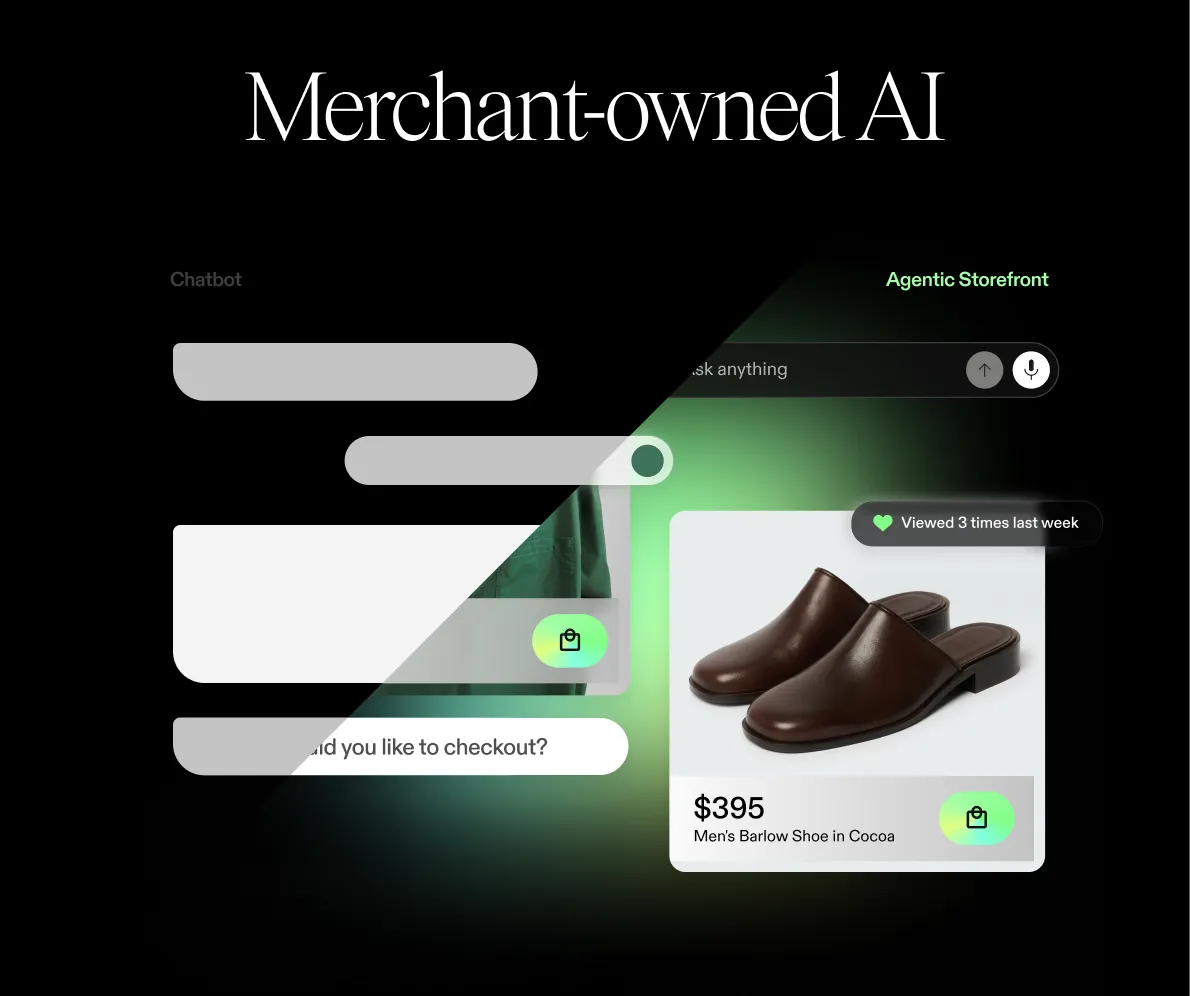
Within an agentic storefront, virtual try on is not just a feature. It is part of a conversion focused system that takes a shopper from intent to action without friction. Agentic platforms already showcase how virtual try on integrates natively with conversational search and AI assisted product guidance, creating a seamless path between inspiration and purchase .
A shopper might begin with a prompt like I need a jacket for autumn. The storefront narrows options using semantic search, suggests items based on past behaviour, and then asks ‘Would you like to try it on?’ That moment collapses barriers between browsing and deciding. It feels less like navigating a website and more like interacting with an in store stylist.
Virtual try on for online shop experiences is becoming a central component of this agentic flow. It makes a storefront dynamic rather than passive, responsive rather than rigid, and adaptive in real time.
Transforming Product Discovery Through Outfit Building
One of the biggest changes in online shopping is how consumers discover products. Instead of hunting through filters, shoppers want curated recommendations and styled looks. Virtual try on makes outfit building fully immersive
Swap’s platform pairs virtual try on with an AI outfit builder, allowing shoppers to see complete looks generated around their taste, body, or occasion. This is the closest digital commerce has come to replicating the experience of walking into a store and letting a stylist pull pieces for you.
This changes the role of product pages entirely. An item is no longer viewed in isolation. It becomes part of a broader, personalised narrative that the shopper can interact with visually and instantly.

Accelerating the Shift to Conversational Commerce
Storefronts are evolving into conversational, AI native environments. As brands move toward agentic storefronts, virtual try on becomes a reinforcement mechanism that supports this new way of shopping.
Text based or voice based queries lead directly to products. Virtual try on acts as the confirmation layer. It verifies that the recommended item aligns with the shopper’s intent. This replaces the traditional pattern of endless scrolling and comparison.
By embedding virtual try on directly within conversational flows, online shopping becomes more fluid, more human, and more aligned with real world behaviour.
Creating a Commerce Experience that Adapts in Real Time
AI powered storefronts that adapt to each shopper are a key part of Swap’s agentic commerce platform. Virtual try on enhances that adaptability. Every interaction provides signals that guide recommendations, styling suggestions, and next steps.
It helps the storefront understand:
- What a shopper is drawn to
- What styling combinations resonate
- What their preferences imply about future choices
This creates a feedback loop that continually improves the shopping experience and shortens the path from discovery to checkout.
Virtual Try On Is Defining the New Standard for Agentic Commerce
Virtual try on is changing more than how shoppers view products. It is reshaping the entire architecture of online shopping. By turning static catalogues into dynamic, intent driven experiences, virtual try on is enabling a new era where shoppers act confidently, storefronts respond intelligently, and decisions happen in real time rather than through endless comparison.
This shift mirrors the broader transformation Swap Commerce is driving. As stores evolve into agentic storefronts, virtual try on becomes a core part of a unified, conversational, immersive shopping experience. It integrates seamlessly with semantic search, outfit building, and native agentic checkout to reduce friction and close the conversion gap that traditional ecommerce has struggled with for years.