
















What is Conversational Search & How Does it Work?
Humans were built to communicate through conversation. Finally, there’s technology that speaks the same language!
In 2024, 15 million people in the US turned to chatbots and LLMs to search online. This number is set to increase to 36 million by 2028, reflecting a major shift towards conversational AI for product discovery, as traditional search volume is predicted to fall by 25%
In this blog, you’ll learn what conversational search is, how it works behind the scenes, and how your business can optimize for conversational search. Find out how to improve your search visibility and customer digital interactions as AI becomes the default visibility platform for commerce brands in the future.
For ecommerce teams, AI search optimization brings these visibility questions together across conversational search, answer engines and AI shopping experiences.
What is Conversational Search?
Conversational search is a search model that allows humans to interact with technology using Natural Language Processing (NLP) instead of rigid keywords.
Instead of typing short queries, people ask full, natural questions to AI assistants, LLMs and chatbots as they would to another person, and get complete, synthesized answers in seconds. By 2026, 25% of all search sessions will take place away from traditional search, ending in zero-click searches. A zero-click search is a type of search that ends without the user clicking through to a website.
What makes conversational search different is its ability to interpret intent, understand nuance, and respond with personalized, real-time information. No more scrolling through pages of links or manually piecing together answers. 63% of consumers want to go quickly from discovery to purchase which conversational search supports. It makes the whole process intuitive and efficient, whether someone uses Siri and Alexa, ecommerce chat interfaces, or agentic commerce platforms.

How Does Conversational Search Work?
Natural Language Processing (NLP)
Natural Language Processing (NLP) allows computers to understand intent, interpret instructions and “speak” back in human language.
Instead of using exact match keywords, NLP allows systems to interpret verbs, entities, modifiers, and sentiment, giving it richer intent interpretation than traditional keyword search.
Google’s 2025 annual trends report shows that "Tell me about" searches have jumped 70% year-over-year as more people use natural language to search online.
Context Awareness
Multi-turn context awareness is one of the biggest differentiators between conversational search and a traditional search engine like Google.
While Google relies on the exact words a user types into its search bar, conversational search systems interpret the broader meaning by considering previous interactions, location, preferences, and even a user’s ongoing goals. This creates a search experience that feels personalized and increasingly predictive.
The contextual memory enables conversational platforms to deliver results that are more accurate, relevant, and aligned with what users need.
Information Retrieval
Conversational search relies on information retrieval to fetch the most relevant and accurate search results from its indexed data collection.
Once the NLP understands the user's intent, the system uses advanced algorithms to scan its knowledge base and return the most relevant information, presenting a complete answer instead of a list of disconnected links.
What makes conversational search different is its ability to interpret ambiguous or incomplete queries by relying on context instead of exact keyword matches.
Retrieval systems also access product attributes, customer data, delivery schedules and inventory to provide answers.
Generative AI and Large Language Models (LLMs)
LLMs like GPT-4 class models are trained on large datasets. It enables them to understand complex search queries, gauge intent, and provide synthesized answers that mirror human-like conversations.
LLMs excel at multi-step searches because they track the conversation flow. If the user asks follow-up questions or provides new details, the LLM understands and adjusts its responses instantly.
A search feels like a dialogue, not a one-way flow of information, which can boost brand loyalty when used in commerce.
Retrieval-Augmented Generation (RAG)
RAG pulls up information in real-time from trusted, indexed sources instead of relying on the model’s knowledge. It reduces hallucination by grounding answers in verified, real-time data, which is crucial for ecommerce accuracy.
For example, if a user is searching for a particular pair of shoes and asks, “Is this shoe available in my size and how soon can it be delivered?” the system will pull live data from stock levels, estimate delivery times and generate a personalized answer.
RAG needs structured data, and it’s used by AI for product discovery.
What are the Benefits of Conversational Search?
Improved User Engagement
Conversational search feels more intuitive and engaging because users are interacting naturally with the platform and receiving personalized answers based on context and knowledge of user needs.
Personalized search experiences lead to better engagement and retention of customers because it makes the process less time consuming and enjoyable.
Personalized Search Results
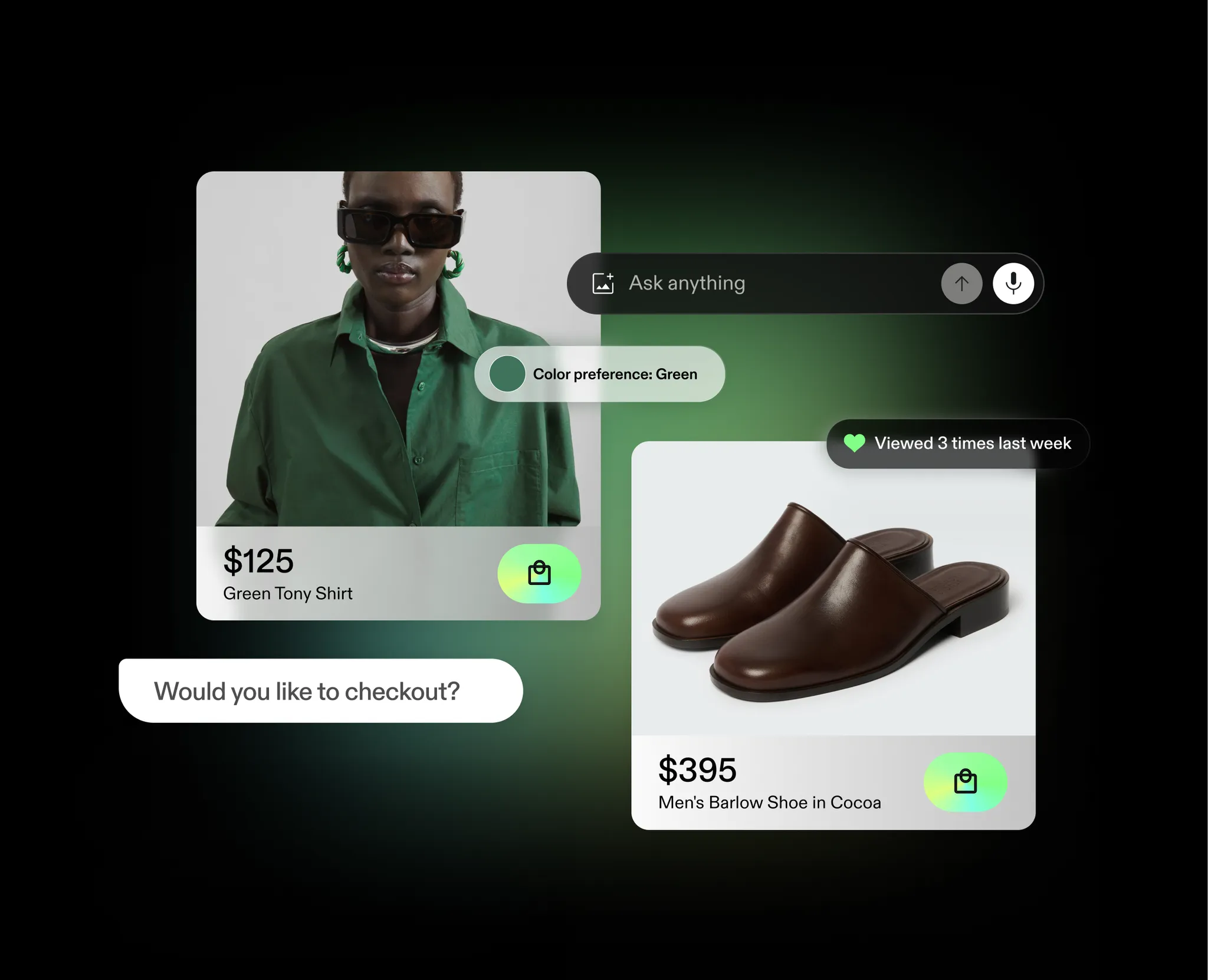
Conversational search platforms excel at personalized results because they draw on context — user’s location, previous search history and preferences.
For example, a search query for an upcoming trip generates a custom list that’s based on the destination’s climate, itinerary, previous purchases, not just where the user is headed.
For businesses, conversational search optimization is the key to higher conversions. Personalization can drive between 10% to 15% uplift in revenue.
When your system understands your audience’s intent and preferences, it can suggest other products of interest. For example, luggage tags are also suggested for a suitcase purchase.
Brands can optimize for personalized search by ensuring product data is structured, descriptive, and enriched with attributes that conversational AI can interpret like Swap’s Universal Catalog.
Faster Query Resolution
Conversational search speeds up discovery by letting users ask direct, context-rich questions and receive immediate, synthesized answers instead of sifting through multiple links and web pages.
Voice search speeds up the process even more because of near-instant answers and a hands-free mode, boosting user satisfaction and reducing friction in the buying journey.
Natural Language Understanding
Conversational search enables users to ask questions in natural, everyday language. NLP helps the system understand and interpret complex questions more efficiently.
For example, a user might ask for their nearest shoe store that has Nike shoes on sale, for a particular size, to be delivered in three days. Conversational search can process every condition at once instead of the user having to check each of these conditions on the store’s website.
Increased Search Accuracy
Conversational search is more effective than traditional search because it can interpret user intent.
By combining NLP with context awareness, past behavior, preferences, and real-time signals, it returns results that closely match what the user meant, even when the query is vague or incomplete, making the results more accurate and relevant.
Enhanced Customer Satisfaction
Today’s customers want brands to cater to their individual needs and remember their preferences. When the search experience is seamless, quick and human-like, customers tend to buy more and return.
Retaining customers is a challenge for many ecommerce businesses. A personalized shopping experience designed for every customer’s unique needs using conversational AI boosts satisfaction and retention.

The Use Cases of Conversational Search
Visual Search
Visual search allows users to upload photos or videos and use conversational search to find the product by asking follow up questions.
1 in 4 visual searches using Google Lens has commercial intent. Combining visual search with conversational search optimization creates a frictionless product discovery journey.
Semantic Search
Semantic search enables conversational search platforms to understand the meaning behind a search query instead of just matching keywords.
Users can ask vague questions such as “Find me red athletic shoes” and still receive relevant answers based on their intent and context.
Conversational Commerce
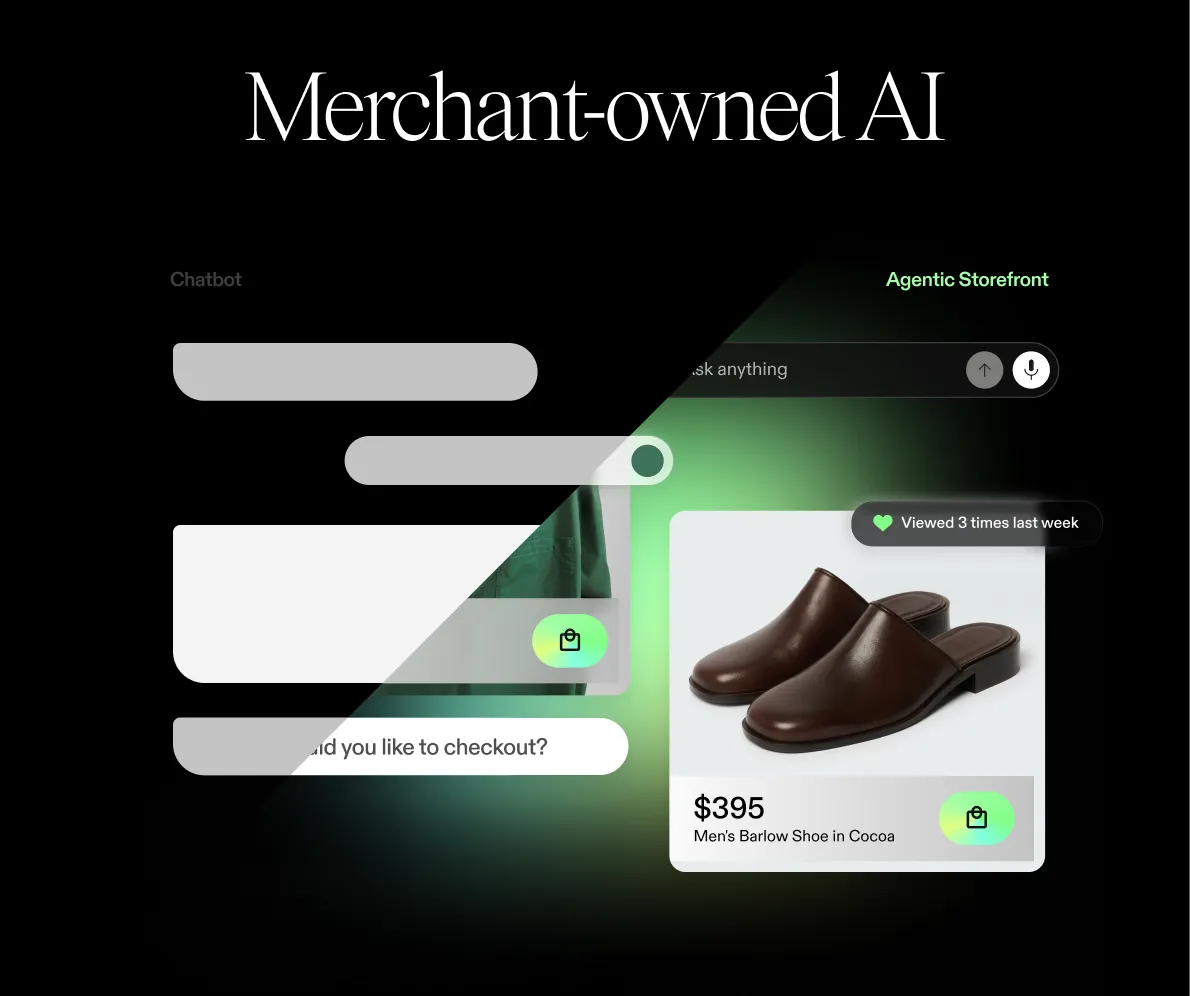
Conversational commerce is giving rise to zero-step checkouts and agentic commerce.
Users can ask product questions, compare different options and buy directly on a conversational search platform in commerce. It creates a smoother, guided buying experience which reduces friction and drives higher conversions.
Multilingual Search Capabilities
Want to reach multilingual customers in different countries? Conversational search platforms can open up a global audience for your business because it can handle multiple languages.
With real-time translation, non-native speakers receive accurate, culturally relevant answers that help them make buying decisions without switching tools.
Answering Complex Customer Queries
Conversational search powered by AI draws from multiple knowledge bases and sources which means it can handle complex customer queries more efficiently and accurately.
The platforms also provide round-the-clock customer service enabling your business to serve customers in real-time across different time zones, without hiring more human agents.
The Future of Conversational Search
AI-powered discovery will blur the lines between search and purchase, making shopping experiences more proactive and predictive thanks to advancements in AI, NLP and machine learning technologies.
Systems will be able to understand deeper intent and deliver even more predictive answers hyper-personalizing online searches.
Thanks to search integrations with augmented reality (AR) and virtual reality (VR), consumer experiences will become immersive and hands-free where users can explore products or information in real time inside virtual environments.
Embrace Conversational Search with Swap Commerce
The next generation of search is conversational, providing users with faster answers and intuitive shopping experiences at every touchpoint. The biggest benefit to consumers will be a unique shopping experience that includes context and their preferences, with recommendations that get more accurate over time. In a competitive commerce landscape, businesses that integrate conversational search can provide a more seamless and quicker shopping experience boosting customer loyalty.
By optimizing for this new discovery layer, and leveraging Swap Commerce’s agentic, AI-powered platform, brands can increase visibility and streamline customer interactions. Swap enables conversational search optimization by giving AI machine-readable data which is the foundation for AI-powered product discovery.
Book a demo today to see how Swap can help you prepare for the next discovery platform without having to build complex infrastructure in your business.