











Key takeaways
AI is now a converting channel, not a curiosity. AI and agents were tied to 20% of all online orders during Cyber Week 2025, and AI-referred visitors converted 31% better than traditional traffic.
Agents can't recommend what they can't read. Structured product data, complete attributes, and real-time pricing and inventory are the entry requirement for agentic discovery.
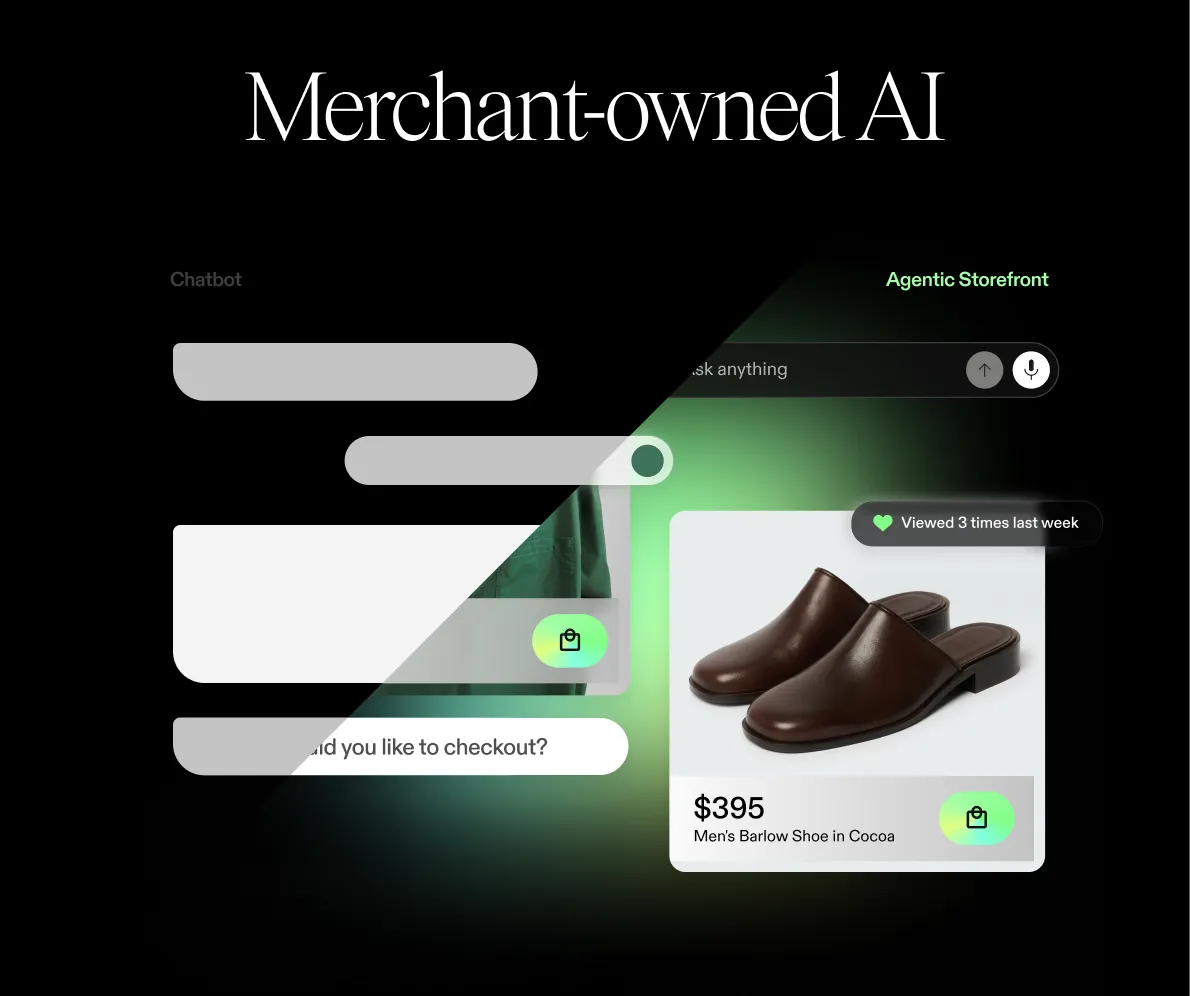
Owning the agent beats optimizing for someone else's. Discovery happens in ChatGPT and Gemini, but the transaction, the data, and the customer relationship stay yours only if the agent runs on your domain.

What is BFCM?
BFCM stands for Black Friday Cyber Monday - the five-day retail period running from Thanksgiving through Cyber Monday that anchors the ecommerce calendar. In 2025 it generated $336.6 billion worldwide, up 7% year over year, with $44.2 billion of that spent online in the US alone. For merchants it is the single densest revenue window of the year, and as of 2026 it is also the first one where AI agents are a material part of how shoppers arrive and buy.
The traditional BFCM playbook - steep discounts, email countdowns, a tuned SEO strategy - still works. Cyber Week 2025 proved it, pulling $336.6 billion worldwide, up 7% year over year, per Salesforce. But the same season was the first where AI and agents moved serious volume.
That changes what preparation means. BFCM 2026 is the first holiday season where agent-readiness is a real competitive variable. The brands that win will not only be the ones with the steepest discounts. They will be the ones with storefronts that agents and agent-assisted shoppers can actually transact with.
What agentic commerce means for BFCM 2026
Agentic commerce is a model of online retail where AI agents handle discovery, comparison, and checkout on a shopper's behalf. For BFCM that splits into two jobs: being discoverable inside tools like ChatGPT and Gemini, and being able to convert the traffic they send. Salesforce tied AI and agents to $67 billion in global sales during Cyber Week 2025, nearly 20% of all online orders.
AI referrals are the highest-converting channel you are not optimizing for
AI-referred shoppers converted 31% better than traffic from traditional channels during the 2025 holiday season, per Adobe. AI traffic to US retail sites grew 693% year over year over the same period. Bain estimates 30% to 45% of US consumers already use generative AI to research products before buying. Small channel, high quality, which is the best possible combination to build for now.
Play 1: Make your catalog readable to agents
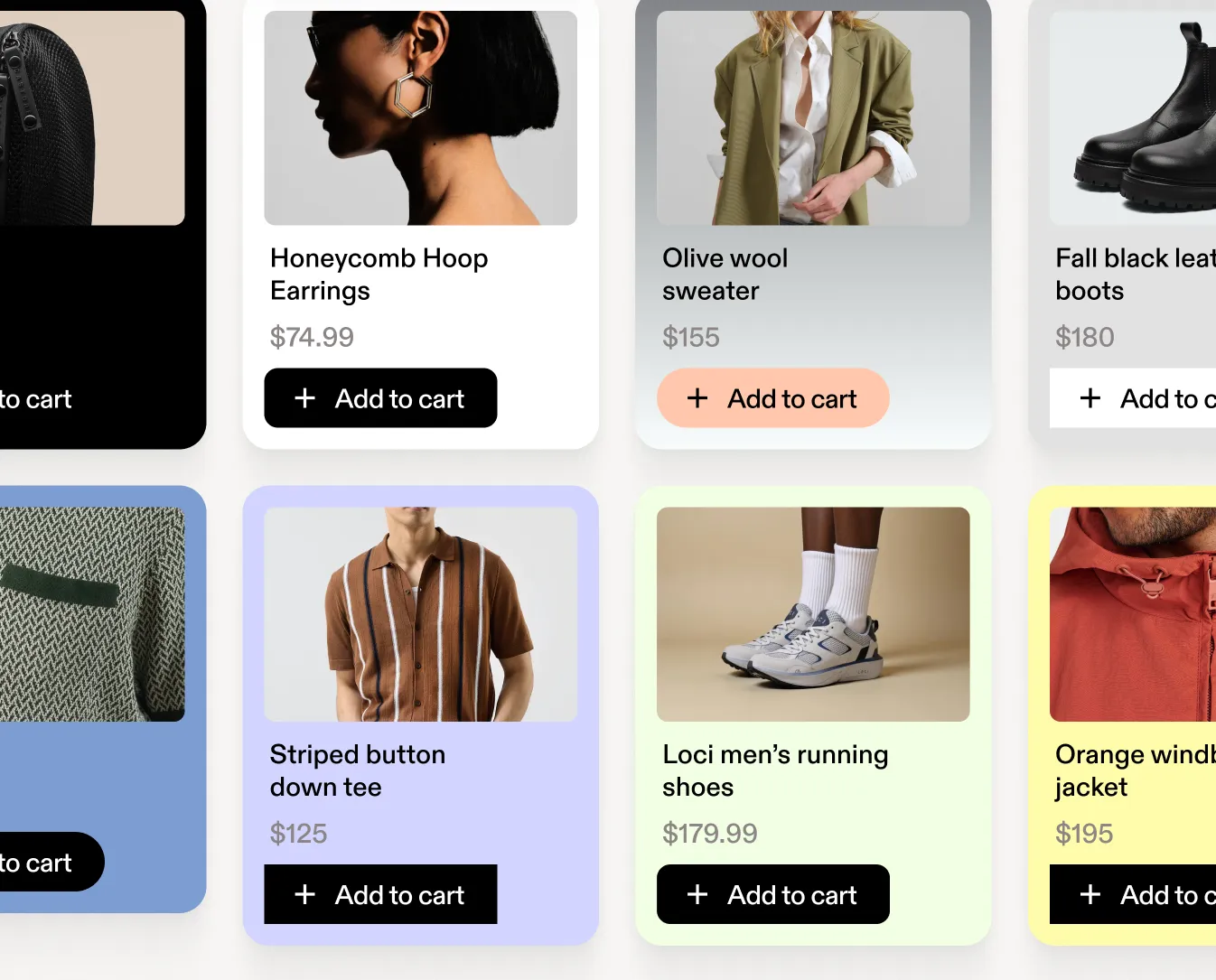
Agents can't recommend what they can't read. Structured product data, complete attributes, and accurate real-time pricing and inventory are what let an agent find, evaluate, and act on a product. If you sell on Shopify, your catalog is already being syndicated to AI shopping surfaces like ChatGPT and Gemini. What is not automatic is being chosen once you are there.

Play 2: Run your own agent, not someone else's
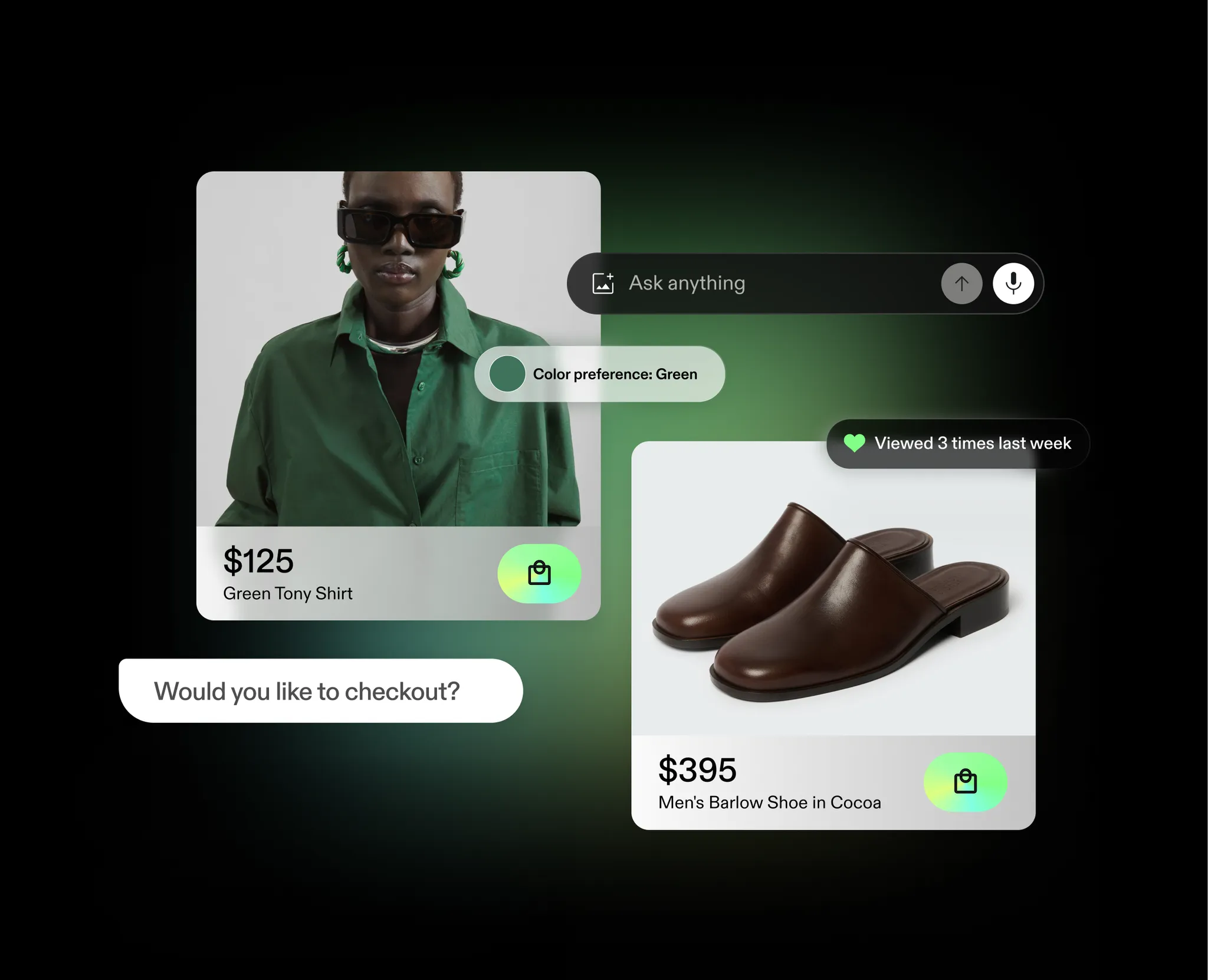
Optimizing for third-party AI tools is not enough, because the transaction still lands on your site. OpenAI scaled back native in-chat checkout earlier this year and rerouted those transactions to merchants' own sites. An agentic storefront puts the conversation on your domain, so the intent data and the customer relationship compound for you rather than for an aggregator.
Play 3: Optimize for answers, not keywords
Discovery is moving from keyword strings to conversational queries, so product content has to describe real use cases. Answer engine optimization makes your content the direct answer to a question. Generative engine optimization builds the authority that gets your brand cited. Agents also cross-check merchant claims against reviews and editorial coverage, so third-party validation is an input too.
Play 4: Extend the agent past checkout
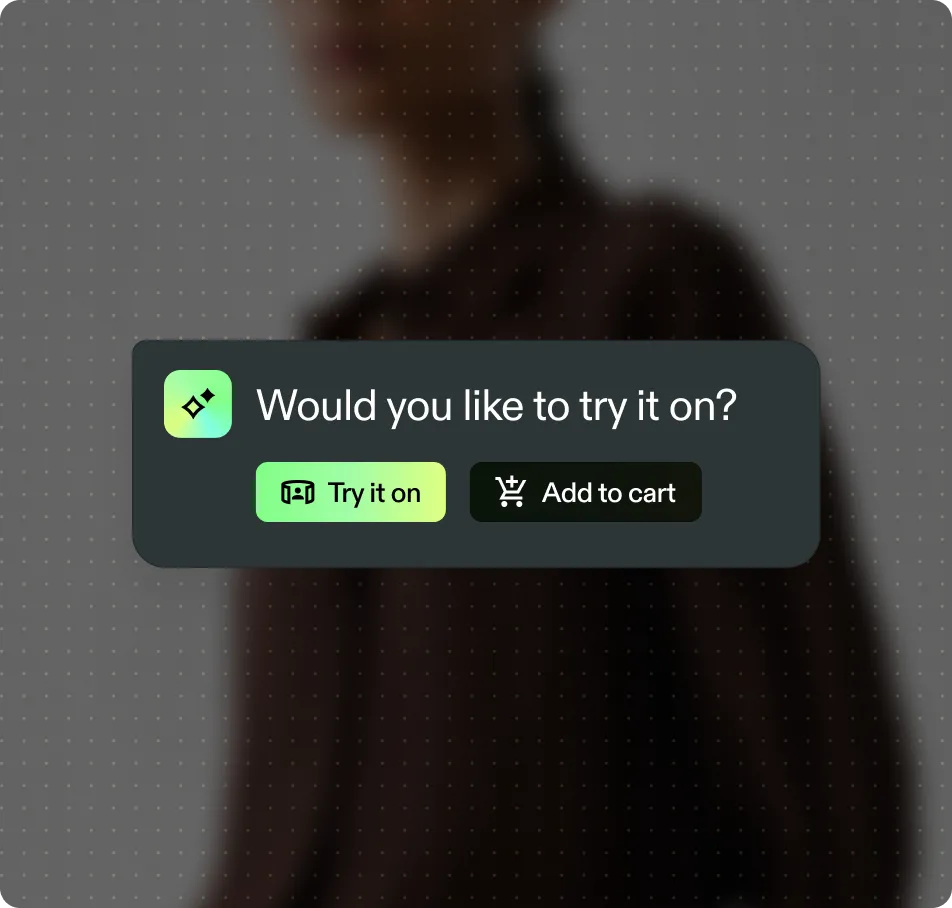
The same agent that closes a sale can carry fulfillment, service, and returns. Agentic service conversations grew 55% week over week during Cyber Week 2025, and agent actions like address changes and return starts surged 70%, per Salesforce. Swap-powered merchants also saw 20% fewer returns with better fit guidance and virtual try-on.
What agent-ready merchants are already seeing
Merchants implementing Swap's Agentic Storefront have seen 2x conversion, a 22% increase in monthly average order volume, a 20% increase in daily total orders, 3x time on site, and 20% fewer returns. 58% of virtual try-on sessions end in an add-to-cart. Every conversation also becomes first-party intent data that compounds season over season.

Winning BFCM 2026 is not complicated. Be findable by the agents, and be ready to sell when they arrive.
Last updated: August 2026
- agentic BFCM
- BFCM 2026
- agentic commerce
- agent-ready ecommerce
- agentic storefront
- AI shopping agents
- answer engine optimization ecommerce
- generative engine optimization retail
- Cyber Week 2025 data
- AI referral traffic conversion