















Last updated: August 21, 2026
What is agentic commerce?
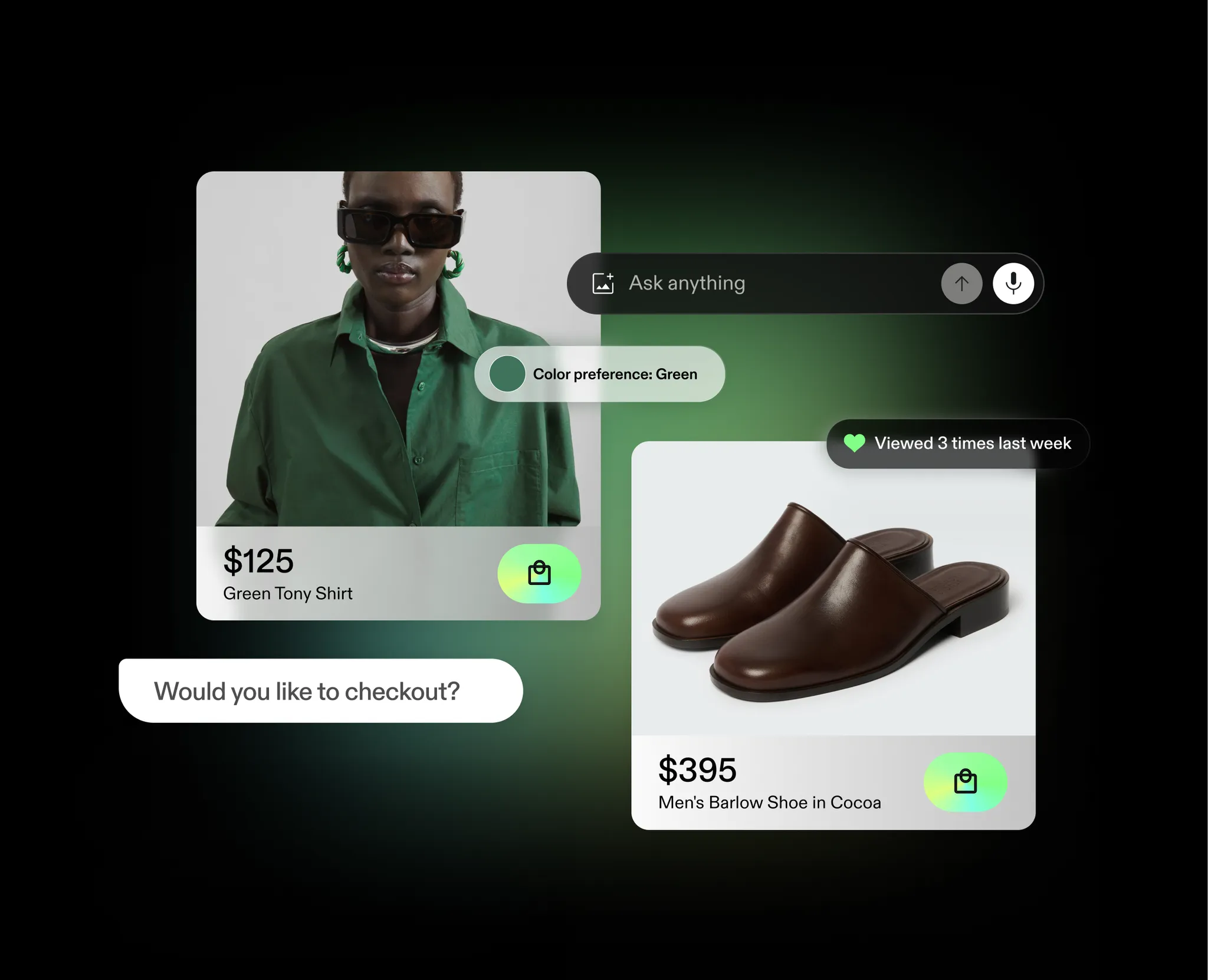
Agentic commerce is a form of online shopping in which an AI agent can interpret a shopper's goal, research products, compare choices and take action on the shopper's behalf. With permission, that action can extend all the way through checkout.
The important shift is delegation. A shopper describes the outcome they want, including preferences, constraints and budget. The agent handles more of the work that once required navigating product pages, filters and checkout screens.
How agentic commerce works
A typical agentic shopping journey follows four steps:
- The shopper gives the agent a goal, such as finding a carry-on suitcase under a set budget.
- The agent searches available product data, compares relevant options and answers follow-up questions.
- The shopper approves the recommendation and sets any limits required before purchase.
- The agent completes checkout through an authorized payment flow and can continue supporting delivery, returns or exchanges.
For this to work reliably, the agent needs structured, current information about products, inventory, pricing, policies and delivery. It also needs a secure way to confirm identity, consent and payment authority.

Agentic commerce vs traditional ecommerce
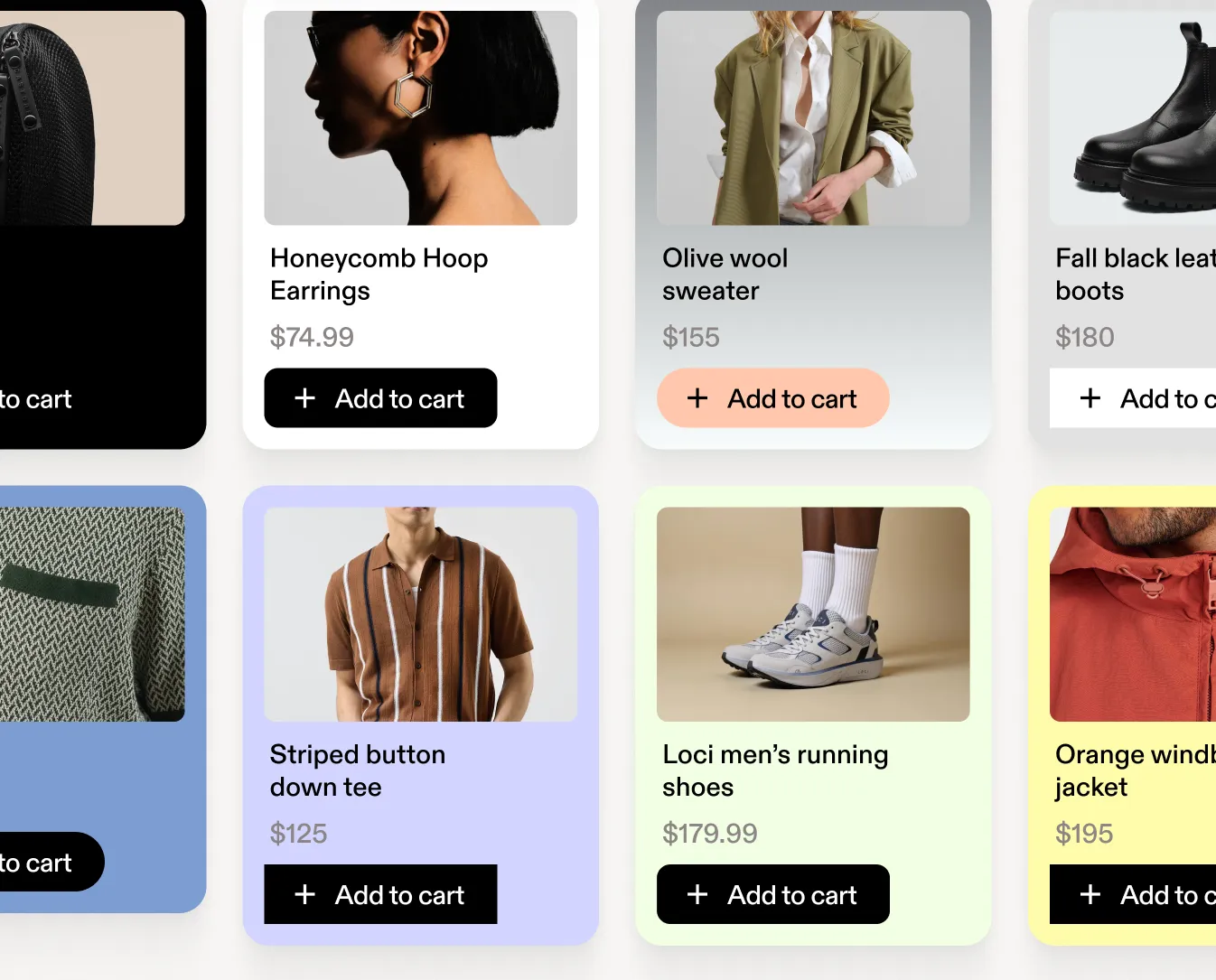
Traditional ecommerce asks the shopper to drive every step: search, open product pages, compare tabs, add an item to the cart and work through checkout. Recommendations may help, but the shopper remains the operator.
Agentic commerce changes that interaction from navigation to delegation. The shopper states an intent, while the agent assembles the information and completes approved actions. The storefront becomes less like a set of pages to browse and more like a conversation that can produce a transaction.
That does not remove the merchant from the experience. Brands still control their catalog, offers, policies and fulfillment. The difference is that those systems must be accessible to the agent as well as understandable to a person.
Agentic commerce examples
Agentic commerce has moved beyond demos. Commerce and payments companies began releasing customer-facing tools and agent infrastructure in 2025:
- Amazon Buy for Me: Amazon began testing a feature that lets its shopping app purchase selected products from other brands' websites on a customer's behalf (Amazon, 2025).
- PayPal Agent Toolkit: PayPal released tools that let developers connect AI agents to commerce actions such as creating orders, invoices and payments (PayPal, 2025).
- Visa Intelligent Commerce: Visa introduced APIs and tokenized credentials intended to let consumers set controls for AI agents that shop and pay (Visa, 2025).
- Mastercard Agent Pay: Mastercard introduced Agentic Tokens and related infrastructure for authenticated, authorized payments made through AI agents (Mastercard, 2025).
Benefits of agentic commerce
For shoppers
- Fewer steps between a need and a completed purchase.
- Faster comparison across products, specifications, prices and policies.
- Recommendations that can account for stated preferences and constraints.
- A continuous conversation that can extend from discovery into post-purchase support.
For merchants
- A conversational route into product discovery for shoppers who begin with a goal rather than a product name.
- Less friction between product questions and checkout.
- New intent signals from the questions, requirements and trade-offs shoppers share.
- A way to keep the brand experience and customer relationship on the merchant's own domain.

Challenges and risks
Allowing software to act for a shopper raises a different set of operational and trust questions. Brands and platforms need to design for them from the start:
- Consent and control: The shopper should know what the agent can do, what limits apply and when approval is required.
- Payment security: Credentials, identity and transaction authority need strong safeguards, especially when an agent can complete checkout.
- Privacy: Personalization can depend on sensitive preference and purchase data, making collection, access and retention policies critical.
- Accuracy: Out-of-date prices, inventory or policy details can produce poor recommendations and broken transactions.
- Integration readiness: Catalog, checkout, fulfillment and returns systems need consistent data and dependable interfaces.
The future of agentic commerce
The technology is early, but investment is accelerating. Precedence Research valued the broader agentic AI market at $5.25 billion in 2024 and projects it could reach $199.05 billion by 2034, a 43.84% compound annual growth rate (Precedence Research, 2025).
Shopping behavior is beginning to move in the same direction. Kantar reported that 25%–45% of generative-AI users shop, research products or compare prices on these platforms (Kantar, 2025, citing Morgan Stanley).
Adoption will still depend on measurable value and trust. In a 2025 survey, McKinsey found that nearly eight in ten companies had deployed generative AI, while a similar share reported no material effect on earnings (McKinsey, 2025). Agentic commerce will need to prove that it can complete useful transactions reliably, not simply add another interface.
For a current view of the market, download the State of Agentic Commerce 2026 report and read the BFCM 2026 playbook.
How brands sell through agentic commerce
Brands make their catalog and checkout readable to AI agents, so an agent can find products, answer questions and complete a purchase without leaving the conversation. Swap's Agentic Storefront gives a brand its own guided shopping agent on its own domain, keeping the customer relationship and first-party data with the brand.
Getting ready starts with accurate catalog data, dependable inventory and pricing, clear policies, and checkout and fulfillment systems that can accept authorized agent actions. The strongest experience gives the shopper clear controls while preserving the brand's voice and service standards.
Download the Report for the latest market findings, or Book a demo to see how Swap can help your brand prepare for agent-led shopping.
Related: conversational commerce and the shift from static browsing to guided shopping.
- Agentic Commerce
- Agentic Commerce Platform
- Agentic Commerce Infrastructure
- Agentic Commerce Trends