














TLDR
- Cross-border software decides who sells the order, who calculates duties and tax, and who holds the customer. Those three questions matter more than any feature list.
- Global-e takes merchant of record. Fast to switch on, but the checkout, the funds, and the customer record move to it. AfterShip covers tracking and returns, and stops before the border.
- Zonos calculates duties and tax well, and stops there. Fulfilment, returns, and the rest of the stack are yours to assemble.
- Swap keeps your brand as merchant of record, ships DDP from your own warehouses or 3PLs, and runs returns and tax compliance in the same system.
Cross-border ecommerce software is the layer that lets a brand sell into a country it does not operate in: pricing in local currency, calculating duties and taxes, clearing customs, and handling what comes back. Most comparisons of this category list features. The useful comparison starts with a different question: after you switch it on, who owns the sale?
What should you actually compare?
Five things, in this order.
- Merchant of record. Does your brand remain the legal seller, or does the provider become it? This decides who holds the checkout, the funds, the tax position, and the customer record. It is the single largest difference between providers and the one most often buried in the contract.
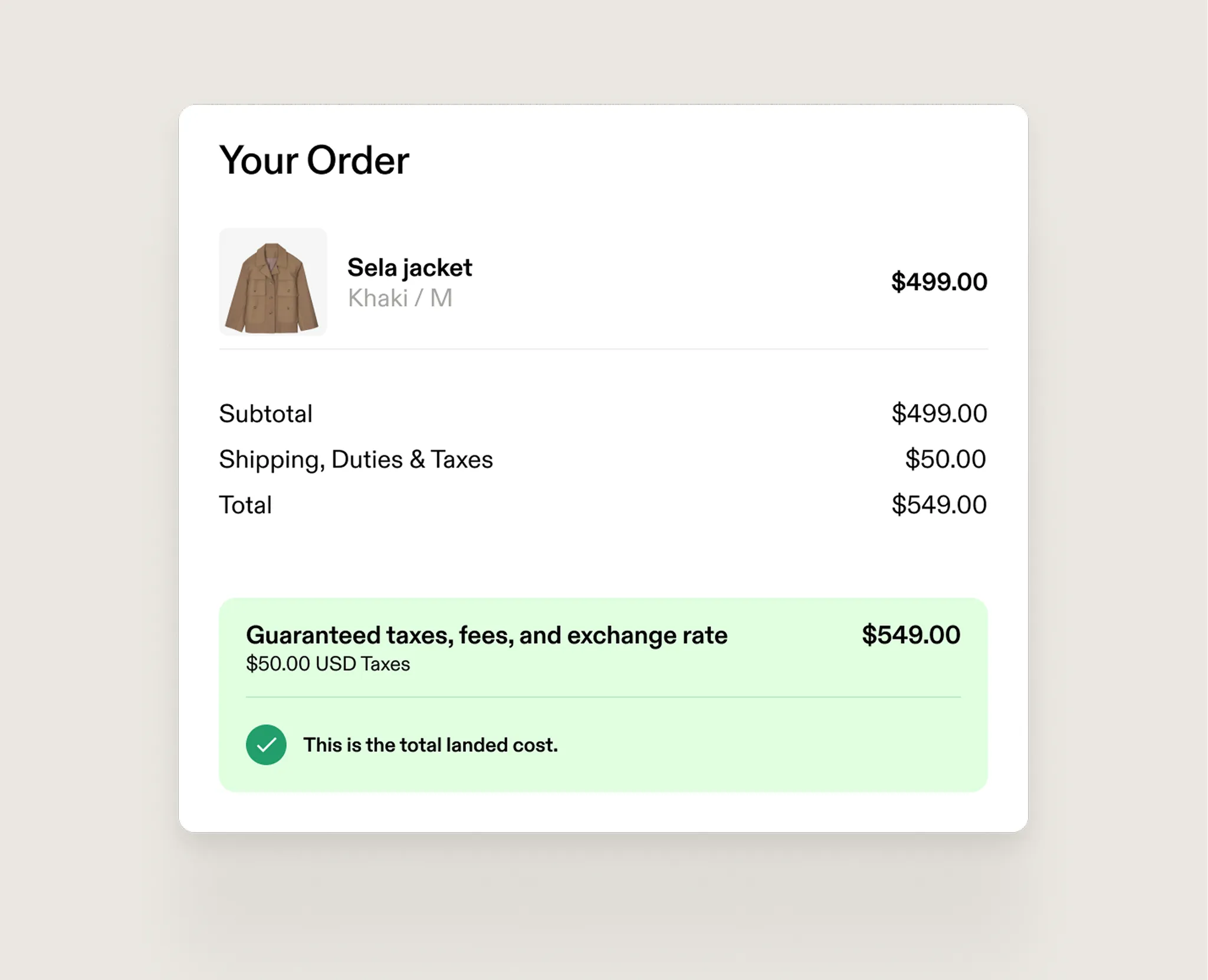
- Total landed cost at checkout. Can the customer see duties, taxes, and shipping as a final price before they pay? If not, the provider is moving the surprise, not removing it.
- Where orders ship from. Some providers route your inventory through their logistics network. Others ship DDP from your existing warehouses and 3PLs. The second keeps your operations intact.
- Returns. International returns are where cross-border margin disappears. A provider that stops at delivery leaves the most expensive part of the journey to you.
- Pricing visibility. A percentage of the cart, a flat fee, or a share of the transaction with a settlement later. Each works. You should be able to explain yours in one sentence.
How does Global-e compare?
Global-e is the incumbent for enterprise cross-border and it works by becoming the merchant of record in each international market. It replaces your checkout with its own, localizes currency and payment methods across a very large set of markets, prepays duties, and settles the proceeds back to you.
Best for: a brand that wants to enter many markets quickly, has no interest in owning international operations, and is comfortable with the provider as seller.
The trade-off is control. The checkout, the customer data, and the cash sit with Global-e until settlement. One Head of Ecommerce who moved to Swap put it simply: with Global-e, “we had very little control.” That is the structural cost of the model, not a bug in it.
Discover our full Swap vs Global-E review
How does AfterShip compare?
AfterShip is a post-purchase platform: shipment tracking, delivery notifications, multi-carrier shipping, and a returns portal. It is widely used and good at what it covers. It is not a cross-border platform. It does not calculate duties or tax, does not show total landed cost at checkout, and does not ship DDP, so an international order still reaches the border with nothing settled.
Best for: a domestic brand that wants a polished tracking and returns experience and has cross-border handled elsewhere.
The trade-off is the gap. Brands often pair AfterShip with a separate duty engine and a separate shipping provider, which is three vendors and three logins for one international order. If international is where you are growing, the post-purchase layer and the cross-border layer should be the same system.
Discover our full Swap vs Aftership review
How does Zonos compare?
Zonos is a duty and tax engine. It calculates landed cost accurately, exposes it through APIs, and lets you keep merchant of record. It does not handle fulfilment, returns, or the rest of the cross-border stack.
Best for: a brand with a strong in-house operations team that wants a calculation layer and will build or buy everything around it.
The trade-off is assembly. Zonos solves one problem well and leaves the next four to other vendors, which is how brands end up running cross-border across five systems.
Discover our full Swap vs Zonos review
How does Shopify’s native cross-border tooling compare?
Shopify Markets gives Shopify brands currency, pricing, and basic duty estimation inside the admin, with a managed option that uses a merchant of record model operated by a third party. Best for: an early-stage Shopify brand testing its first international market with low volume.
The trade-off arrives with scale. Once international is a line of business, brands tend to need DDP from their own 3PLs, proper returns, and tax compliance across markets, and the native tooling either hands that to a merchant of record or leaves it to apps.
How does Swap compare?
Swap is built on the position the others trade away: your brand stays merchant of record. Swap Global calculates total landed cost before the customer pays, ships DDP from your existing warehouses and 3PLs, and keeps the checkout, the customer data, and the pricing decisions with you. Returns, tax compliance, and shipping run in the same system, so international is one operation rather than four vendors and a reconciliation.
Best for: a scaling brand that treats international as its own revenue, not a channel it rents.
The trade-off is honest: because you remain the seller, the registration and compliance obligations stay yours. Swap handles the calculation, the collection, and the border. It does not take your place in the transaction, and for most brands that is the point.
Which one should you choose?
If you want to switch on twenty markets this quarter and never think about them, a merchant of record provider will do that, at the cost of owning any of it. If you have the team to assemble a stack, a calculation engine is a reasonable first piece. If international is a business you intend to keep, the question is whether your provider is infrastructure under your brand or a seller standing in front of it.
Growth shouldn’t cost you ownership.
Book a demo to see Swap Global calculate total landed cost in your checkout.
- cross-border ecommerce software
- Global-e alternative
- Zonos alternative
- AfterShip alternative
- merchant of record