














TLDR
- The merchant of record owns the sale: the payment, the tax on it, the refunds, and the customer relationship.
- The importer of record owns the border crossing: the customs declaration, the duties, and the liability if it is wrong.
- Some cross-border providers deliver DDP by taking merchant of record. That makes them the seller and you the supplier.
- You can keep merchant of record and still ship DDP. Swap Global is built on that position.
The merchant of record is the legal seller of an order: the entity whose name is on the transaction, who collects the payment, and who is responsible for the sales tax on it. The importer of record is the entity responsible for bringing the goods into the destination country: the one that files the customs entry and settles the duties and import taxes. They sound alike. They are not the same job, and the difference decides how much of your international business you actually own.
What does a merchant of record do?
The merchant of record owns the sale. Their name appears on the customer’s bank statement. They are responsible for charging the right tax at checkout, remitting it, handling refunds and chargebacks, and holding the customer relationship. If a customer disputes the order, the merchant of record answers.
For a domestic brand this is not a question. You are the merchant of record because you are the only party in the transaction. It becomes a question the moment you sell cross-border, because some providers offer to take the role off your hands.
What does an importer of record do?
The importer of record owns the border crossing. They declare the goods to customs, classify them, state their value and origin, and pay the duties and import taxes due. If the declaration is wrong, the importer of record carries the liability.
Under DAP shipping, your customer is the importer of record. That is why the carrier bills them at the door. Under DDP shipping, the duties are settled before delivery, which means a party on the seller’s side takes on that responsibility, and the customer never sees the border.
Why do brands confuse the two?
Because some cross-border providers bundle them. Their pitch is simple: ship DDP, sell in local currency, and let us handle the compliance. What that often means in practice is that they become the merchant of record, not just the party handling import. They are now the seller. You are the supplier.
The customer bought from you. The record says otherwise.
What do you give up when a provider becomes merchant of record?
Three things;
- Control - The checkout is theirs. Pricing rules, payment methods, promotions, and currency logic run on their terms, and you request changes rather than make them.
- Clarity - Your international revenue arrives as a settlement from the provider, net of their fees, rather than as sales you booked. Reconciling what a customer paid against what you received takes a report, not a glance.
- The customer - The transaction belongs to the provider’s entity. The customer record, the dispute history, and the data that would tell you what to sell next in that market sit with them, and they come with you only if the contract says so.
That is a high price for a service that can be delivered without it.
Can a brand keep merchant of record and still ship DDP?
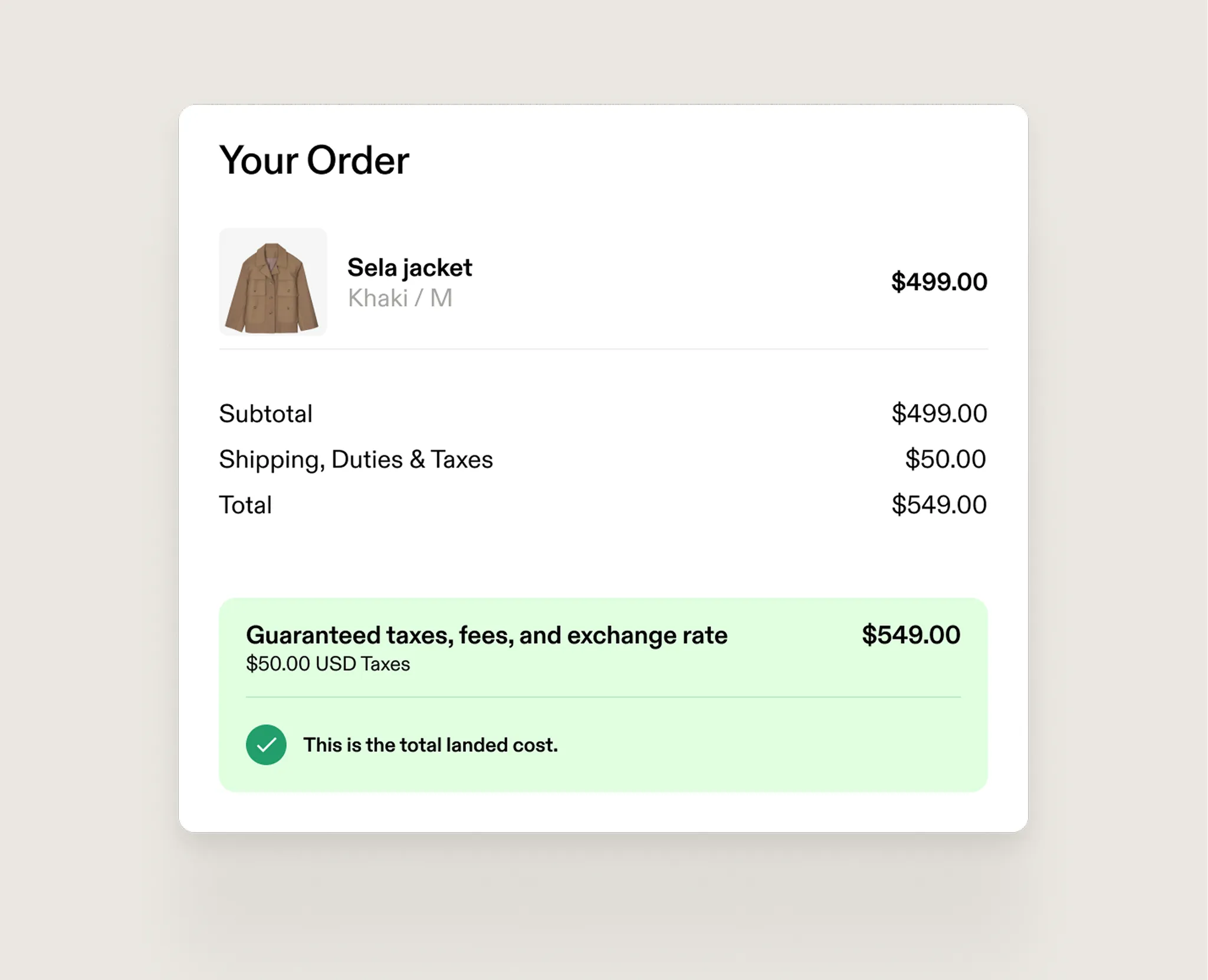
Yes. Duties prepaid is an outcome of calculating total landed cost correctly at checkout and settling it before delivery. Nothing about that requires another company to become your seller.
Swap Global takes this position by design. Your brand remains merchant of record. Orders ship DDP from your own warehouses or 3PLs, the customer sees the full price before they pay, and the checkout, the pricing decisions, and the customer data stay with you. Import compliance is handled as infrastructure under your brand, not as a reason to take your brand’s place in the transaction.
Which model should your brand choose?
If you are testing a market with a handful of orders a month, a provider that takes a merchant of record can be a fast way to switch on a flag. If international is a line of business rather than an experiment, the question changes. You would not let a domestic payments provider become the seller of record for your home market. The same logic applies abroad.
Price certainty at checkout is the customer’s problem to solve. Ownership of the sale is yours. The right infrastructure gives you both.
Book a demo to see how Swap Global keeps your brand as merchant of record while shipping DDP.
- what is a merchant of record
- merchant of record
- importer of record
- DDP shipping
- cross-border compliance